
2. Hackers activate automatic defrosting accross European supermarket fridges (www.tomshardware.com)
A cyberattack has hit supermarkets in Europe, disabling refrigerators.
A cyberattack has disrupted supermarket operations across Europe by disabling their refrigeration systems, leading to automatic defrosting. The incident raises concerns about cybersecurity in essential services.
3. A Modern Web App in C (prophitt.me)
A modern web app written in c and served the old way: CGI, SQLite and a single binary. No frameworks, no containers and no regrets.
Discover how to build a contemporary web application using C without any frameworks or containers, relying solely on CGI and SQLite. This approach emphasizes simplicity and efficiency, showcasing a unique perspective on modern web development.

5. Muse Wonder (research.meta.ai)
A frontier model that leads on personal and professional agents
Discover how a new frontier model is shaping the future of personal and professional agents, highlighting innovative approaches and potential applications.
6. 11 year old unsoundness bugs found in Rust borrow checker (github.com)
In the following code: use std::sync::Mutex; static KEPT: Mutex<Vec<Box<dyn std::any::Any + Send>>> = Mutex::new(Vec::new()); struct Q<T: 'static + Send>(Option<T>); impl<T: 'static + Send> Drop fo...
7. AI Is a Tool. Using It Well Takes Skill. (yyhh.org)
A response to Rich Hickey's "'AI' is Not a Tool": automation and tool use can coexist, and wielding an LLM well requires skill, feedback, and judgment.
Effective use of AI requires more than just access; it demands skill and discernment to navigate its capabilities alongside automation. This piece argues against the notion that AI isn’t a tool, emphasizing the importance of feedback and judgment in harnessing its potential.

8. Apple HomeView (www.apple.com)
Apple HomeView is a smart display with Siri AI, Liquid Retina display, high-fidelity audio, FaceTime, smart home controls, built-in privacy, and more.
Apple’s new HomeView smart display combines a Liquid Retina screen with high-fidelity audio and Siri AI, offering features like FaceTime and smart home controls while prioritizing user privacy. It’s designed to enhance both entertainment and home automation experiences.

9. Deloitte falsified documents to evade tax on Abramovich's wealth (www.bbc.com)
Backdated paperwork also made the Russian oligarch’s yachts and mansions disappear from accounts, investigation finds.
Deloitte allegedly created falsified documents to help Roman Abramovich avoid taxes, including making his luxury assets vanish from financial records. The investigation reveals troubling practices that raise questions about corporate accountability.

10. Mozilla Introduces Firefox Enterprise (www.firefox.com)
11. Codex CLI installs a persistent, self-updating background daemon by default (github.com)
What variant of Codex are you using? CLI — 0.157.0, installed via npm install -g @openai/codex, Linux (WSL2) What feature would you like to see? Please make daemon_auto_start opt-in (default false)...
The latest version of Codex CLI installs a background daemon by default, which some users feel should be an opt-in feature instead. This discussion highlights user concerns about automatic updates and system resource usage.

12. Redesigning Source Control at Anthropic (www.anthropic.com)
As our merges per day grew more than tenfold, source control became our biggest development bottleneck. Here, we share how we migrated to an in-house version control system in five months.
Anthropic faced significant challenges with source control as their merge frequency skyrocketed, leading to development delays. They detail their successful transition to a custom version control system within five months to address these issues.
13. CFTC Staff Were Told to Retract Analysis of Suspicious Oil Trades (www.bloomberg.com)
14. Turn a WiFi 7 Router into a 320Msps Software Defined Radio Receiver (github.com)
Contribute to h0m3us3r/w1700k-sdr development by creating an account on GitHub.
Learn how to transform a WiFi 7 router into a high-speed software defined radio receiver by contributing to an open-source project on GitHub. This guide offers a unique approach for tech enthusiasts looking to enhance their networking devices.
15. Citroen revives the 2CV for an electric age (www.bbc.co.uk)
16. QGIS bans AI assisted contributions (github.com)
Followup discussion at https://lists.osgeo.org/pipermail/qgis-developer/2026-September/068576.html.
This formally changes the AI policy to a strict "NOT ALLOWED" policy.
This formally changes the AI policy to a strict "NOT ALLOWED" policy.
QGIS has implemented a strict ban on AI-assisted contributions, marking a significant shift in its policy. This decision is part of an ongoing discussion among developers about the role of AI in the open-source mapping platform.
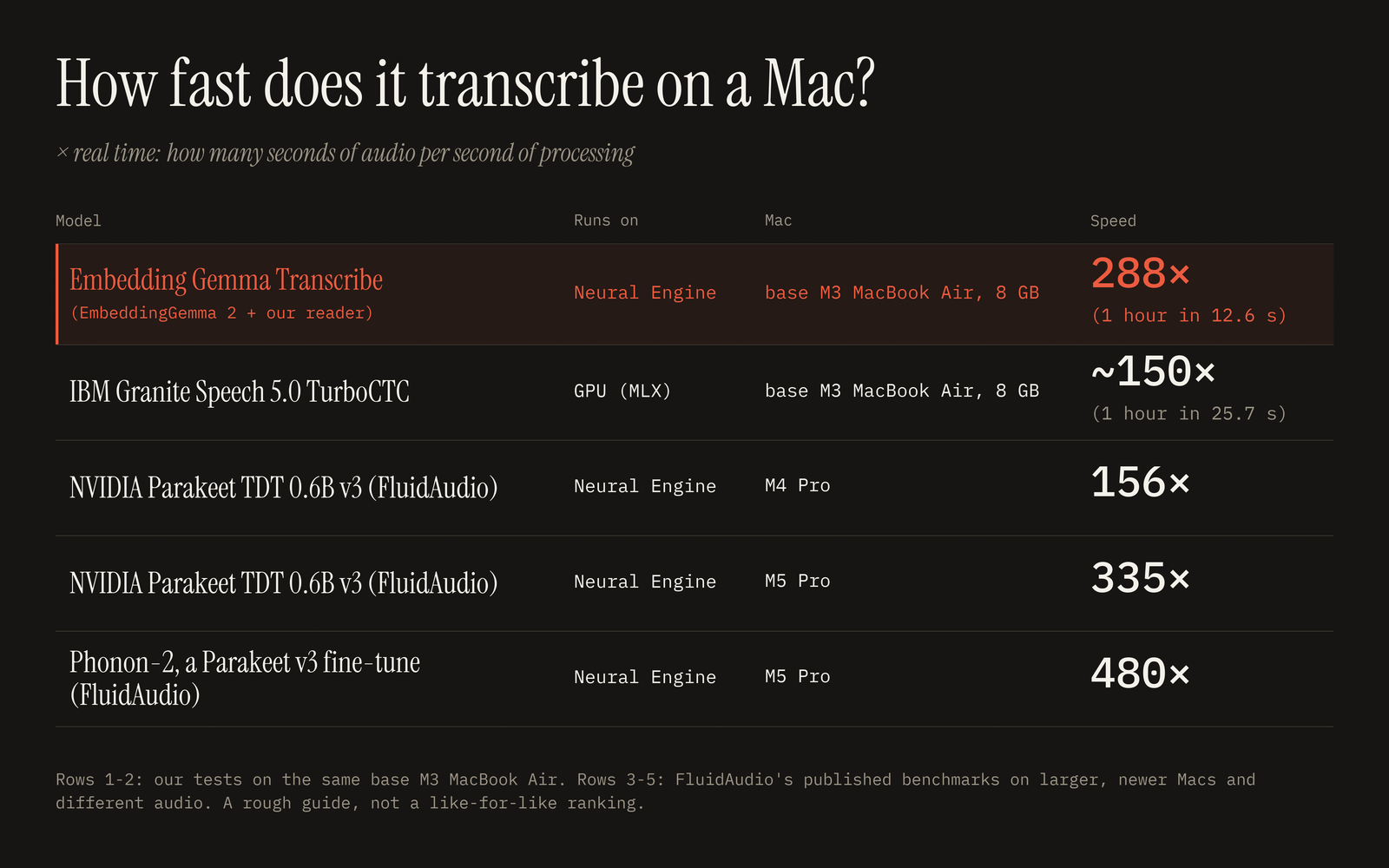
17. An hour of audio transcribed in about 13s on MacBook Air (eg2.haku.sh)
An embedding model, turned into a speech-to-text model. An hour of audio in about 13 seconds on a base MacBook Air, on device.
A new speech-to-text model can transcribe an hour of audio in just 13 seconds on a standard MacBook Air. This impressive performance highlights advancements in on-device processing capabilities.

18. AI coding agents generate more code, but not more software (arstechnica.com)
Study finds coding efficiency gains get "absorbed" by human review "bottleneck."
A recent study reveals that while AI coding agents can produce more code, the increased output is often stalled by the need for human review, creating a bottleneck in software development. Understanding this dynamic could reshape how teams integrate AI tools into their workflows.

19. Ledger confirms hidden chip in crypto wallet amid $92M theft claims (crypto.news)
Ledger confirms a hidden hardware implant in a customer's wallet as CryptoBilis halts sales amid an investigation into reported crypto thefts.
Ledger has acknowledged the presence of a concealed chip in its crypto wallet, coinciding with investigations into significant theft claims. Meanwhile, CryptoBilis has paused its sales as scrutiny intensifies over these security concerns.
20. Thinking Will Become a Hobby (www.spinellis.gr)

21. OpenAI engineer arrested in bugging of executive conference room (sfstandard.com)
Federal prosecutors say an employee from Saudi Arabia planted an audio recorder and left another unattended in his bag.
22. Hittite royal archive found in Turkey (www.thehistoryblog.com)
23. Why aren't AI companies being charged for hacking? (mortoray.com)
24. Show HN: PS2 games statically recompiled to WebAssembly (github.com)
PS2 games in the browser: static recompilation to WebAssembly with a native runtime - snuri00/ps2-web-recomp
Play classic PS2 games directly in your browser using a method that statically recompiles them to WebAssembly. Discover how this project enables a native runtime for an authentic gaming experience online.

25. Thunderbird for iOS (blog.thunderbird.net)
The team has been working hard behind the scenes laying a strong foundation for the Thunderbird iOS app, building natively from scratch.
The Thunderbird team is developing a new iOS app from the ground up, focusing on creating a solid foundation for its features and functionality. This effort signals a significant expansion of Thunderbird’s reach beyond desktop platforms.

26. 'AI' Is Not a Tool by Rich Hickey (gist.github.com)
'AI' is Not a Tool by Rich Hickey. GitHub Gist: instantly share code, notes, and snippets.
27. Intel D270 GPU AI Accelerator–Up to 480 GB LPDDR5X (www.intel.com)
28. Making big downloads resumable in Firefox (lunarwatcher.codeberg.page)

29. AI Models Can Provably Hide Arbitrary Capabilities (arxiv.org)
Capability evaluations aim to surface dangerous model behaviors before deployment, but their reliability depends on the assumption that hidden capabilities can be elicited. We show this assumption does not hold under adversarial conditions by constructing backdoor attacks that embed encrypted neural networks within host model weights, decrypting and executing them only upon receiving a secret trigger. Using digital lockers, these hidden circuits remain provably hard to elicit and interpret under cryptographic assumptions, even given full access to model weights, extending prior work from hiding fixed strings to arbitrary computations. We implement our proof of concept constructions in PyTorch and evaluate elicitation through fine-tuning, weight noising, gradient-based trigger search, and latent adversarial training on a small chemical reaction prediction task - a proxy for CBRN-relevant capabilities. Our results demonstrate resistance to these methods and, together with our cryptographic guarantees, reveal a limit of elicitation-based capability audits. We release our models to support the improvement of defenses.
Researchers demonstrate that AI models can conceal harmful capabilities through backdoor attacks, challenging the reliability of current capability evaluations. The study reveals how encrypted neural networks can be hidden within models, activating only under specific conditions, raising concerns about the safety of deploying AI systems.