1. Show HN: Guitoro, a virtual guitar you strum with your keyboard (guitoro.com)

The most realistic and most complete virtual guitar online. Play it with your keyboard or by touch, slow songs down and see which strings each strum hits.

Guitoro lets you play a virtual guitar in your browser, offering a range of instrument types and practical tools for learning. With features like adjustable playback speed and no signup required, it’s an accessible option for music enthusiasts looking to practice or experiment with guitar sounds.

2. Show HN: Pulse Local, a Mac budgeting app whose AI models run on your machine (pulseos.finance)

Other apps keep your data local and still send your question to someone else’s model. We run the models on your machine too.

Pulse Local is a new budgeting app for Mac that prioritizes user privacy by keeping all data and models on your device, eliminating the need for accounts or internet access. It aims to provide a secure way to manage your finances while answering your spending questions directly on your machine.

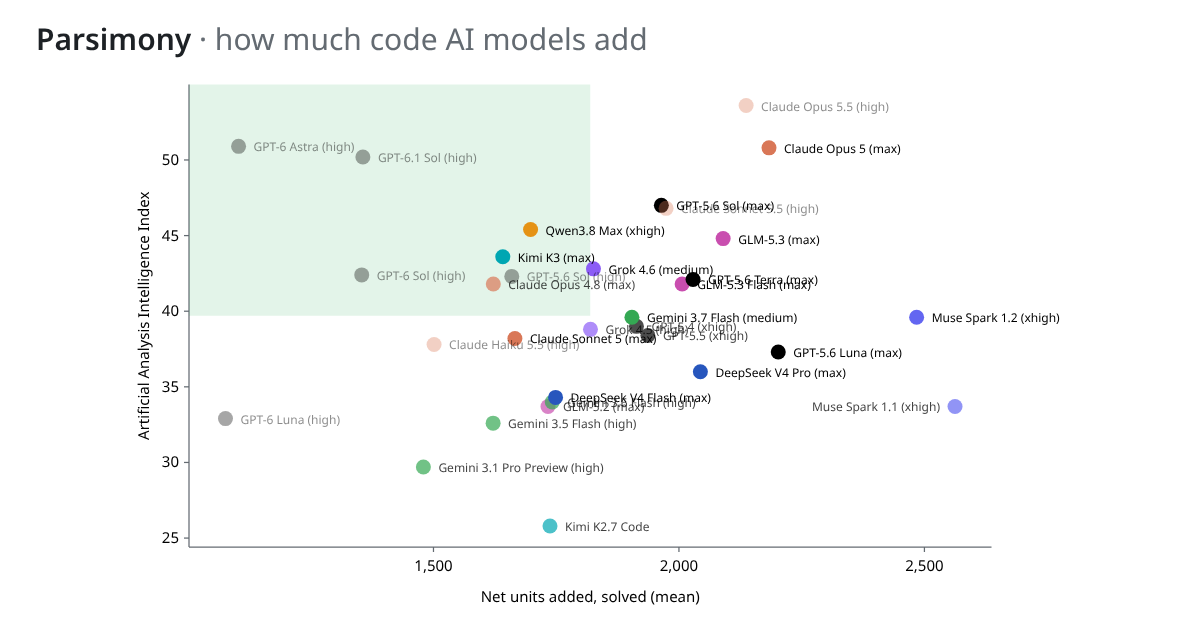
3. Show HN: Parsimony – an open-source benchmark for how much code AI models add (parsimony.lasu.dev)

An open-source benchmark of how much code AI models add.

Parsimony introduces a new way to evaluate AI models by focusing on how much additional code they generate, which can complicate long-term project maintenance. By counting “coding units” instead of just lines of code, it aims to provide a clearer picture of code quality and manageability.

4. Show HN: Spotatui, a Spotify TUI/GUI without web API rate limits (github.com)

A fast, standalone terminal music player in Rust: native Spotify streaming plus local, Subsonic, radio, Qobuz and Youtube sources - LargeModGames/spotatui

Spotatui is a new client for Spotify that overcomes the limitations of the Spotify web API, allowing for a smoother user experience without the usual rate limits. After reviving an earlier project, the developer has worked extensively to address various challenges, making it a notable alternative for Spotify users.

5. Show HN: How Random Are You? (lab.specr.net)

Say numbers out loud as randomly as you can. Before each one, a predictor in your browser seals its guess, and a split-flap board shows how far ahead of chance it gets.

Test your randomness by saying numbers aloud while a predictor tries to guess them in real-time. The interactive experience tracks how well the predictor performs against pure chance, making for a fun and engaging challenge.

7. Show HN: XY Music Notation (music.xy.dev)

A developer has created a unique music notation system for a new base-12 keyboard, translating traditional notes into a numerical format. The accompanying sheet music tool, built on MuseScore, features custom note heads to aid in learning this innovative approach to music.

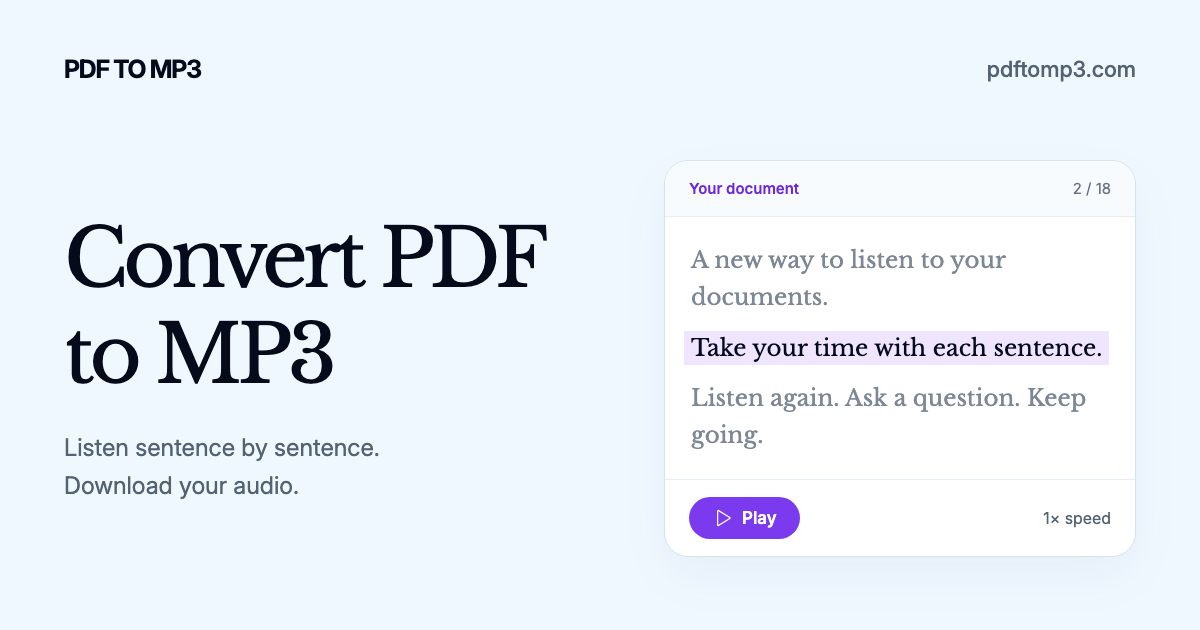
8. Show HN: Use your OpenAI subscription to create audiobooks (pdftomp3.com)

Connect Codex or Claude, add a speech key, and send your first document to PDF TO MP3.

Transform your written documents into audiobooks by connecting Codex or Claude with a speech key and using the PDF TO MP3 tool. This method allows for easy audio conversion, making your content accessible in a new format.

9. Show HN: Stream live open data in two commands (docs.hypermass.io)

Access live open data streams effortlessly with this open source tool that requires no sign-up. Try out various streams, including extreme UV images of the sun and live disaster updates.

13. Show HN: Deslop – Oxlint rules for AI-generated TypeScript (github.com)

Contribute to maharshi365/deslop development by creating an account on GitHub.

Deslop identifies issues in AI-generated TypeScript by flagging unsafe types, duplicate code, and ineffective tests, helping developers maintain code quality. It’s a useful tool for those looking to enhance their TypeScript projects.

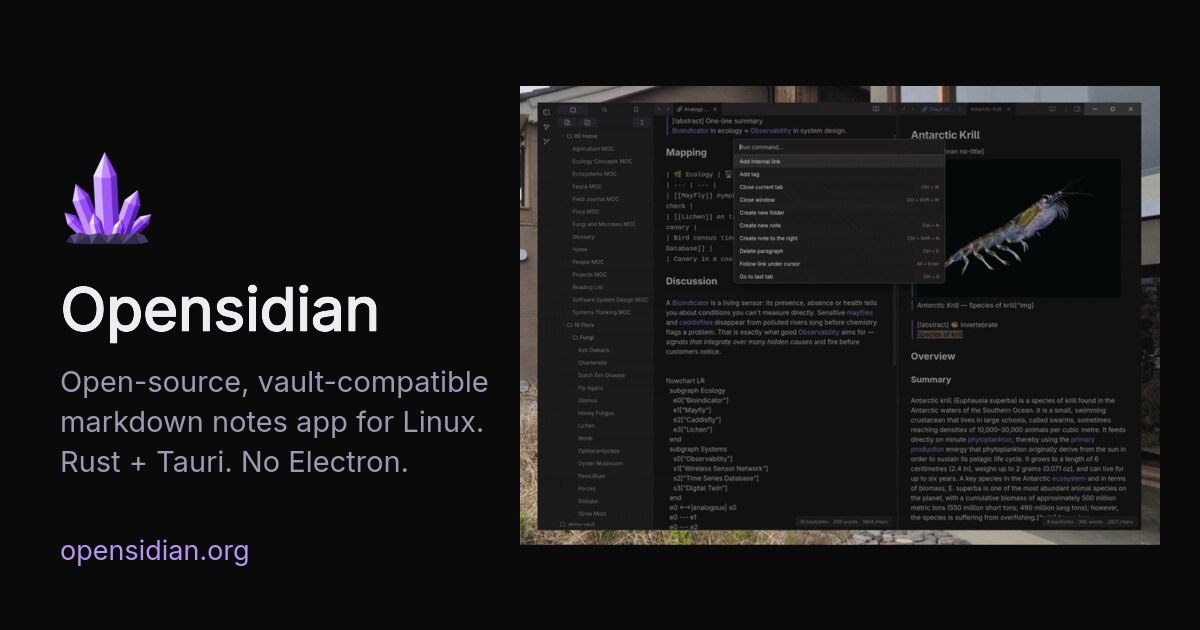
14. Show HN: Opensidian (opensidian.org)

Opensidian is an open-source, vault-compatible markdown notes app for Linux. Wikilinks, backlinks, graph view and Obsidian community themes. Rust + Tauri v2, no Electron.

16. Show HN: SolidCraft – Open-Source Parametric CAD in Rust (With MCP Support) (github.com)

SolidCraft: an open-source parametric 3D CAD application built in pure Rust. Desktop, web, and automation through MCP. - bherbruck/solidcraft

SolidCraft is a new open-source 3D CAD tool developed in Rust, offering parametric design capabilities for desktop and web use, along with automation support through MCP. It’s a noteworthy option for those looking for a customizable CAD solution.

24. Show HN: An experimental pattern-first DAW that supports MCP (github.com)

Contribute to andrewfader/blokkily development by creating an account on GitHub.

An experimental digital audio workstation (DAW) called Blokkily is now available for contributions on GitHub, focusing on a pattern-first approach and supporting MIDI Control Protocol (MCP). Check it out if you’re interested in music production tools and collaborative development.

27. Show HN: Atticus – Hold-to-talk voice assistant for macOS that runs on Claude -p (github.com)

Fast, free voice assistant for your Mac. No API key: runs on your Claude Pro or Max plan. Remembers you and learns your shortcuts. Hold ⌃⌥Space and talk. - SaarthurR/atticus-mac

A 9th grader named Saarth has developed Atticus, a fast and cost-effective voice assistant for macOS that handles tasks efficiently. It processes simple requests locally for quick responses while utilizing AI for more complex tasks, making it a versatile tool for Mac users.

29. Show HN: Factory DS, A Factorio-Like Game for the Nintendo DS (ronangaillard.github.io)

Or how I ended up building a factory game for a 2004 handheld with 4 MB of RAM, with a lot of help from Claude Code
Yes, I even made a game card for it. No, it’s not for sale.
Download Factory DS (factory-ds.nds, 1.9 MB, in English and French). It runs on a real DS with a flashcart, or in an emulator like melonDS.
Why the Nintendo DS? I think the Nintendo DS is one of the best consoles ever made. It’s far from the most powerful, but I find it one of the best designed. Two screens, a real d-pad, four buttons and two shoulder buttons, and everything falls right under your thumbs. It’s a clamshell, so you can throw it in a backpack without being afraid of breaking it, and it’s simple: you open it and you play, you close it and it sleeps. And of course there is some nostalgia, I spent a lot of hours on it as a teenager.

Article Details

Browse by Date

Type to search HN and engineering blog articles
Press Escape to close  |  ↑↓ to navigate  |  Enter to open